

সোমবার, ০২ মার্চ ২০২৬, ১১:৫৯ পূর্বাহ্ন


Okay, so check this out—wallets are confusing. Really. At first glance they’re just a little icon in your browser, a polite popup asking for permission. But then things get messy fast: approvals piling up, gas fees sneaking in, sites asking for broad account access. Whoa! My instinct said something felt off about the default experience many users tolerate. I tried a few alternatives. Initially I thought all extensions were roughly the same, but then I spent a week testing behavior under real trading stress and realized that some differences actually matter—big time.
I’ll be honest: I’m biased toward practical tools. I care about UX, safety, and not losing money because a UI hid a checkbox. This part bugs me. Some wallets bury dangerous defaults behind fancy copy. That’s how mistakes happen. My gut said there had to be a better middle ground—one that gives power users granular controls while keeping newcomers from accidentally approving everything. So I started using a cleaner, more deliberate wallet: rabby.
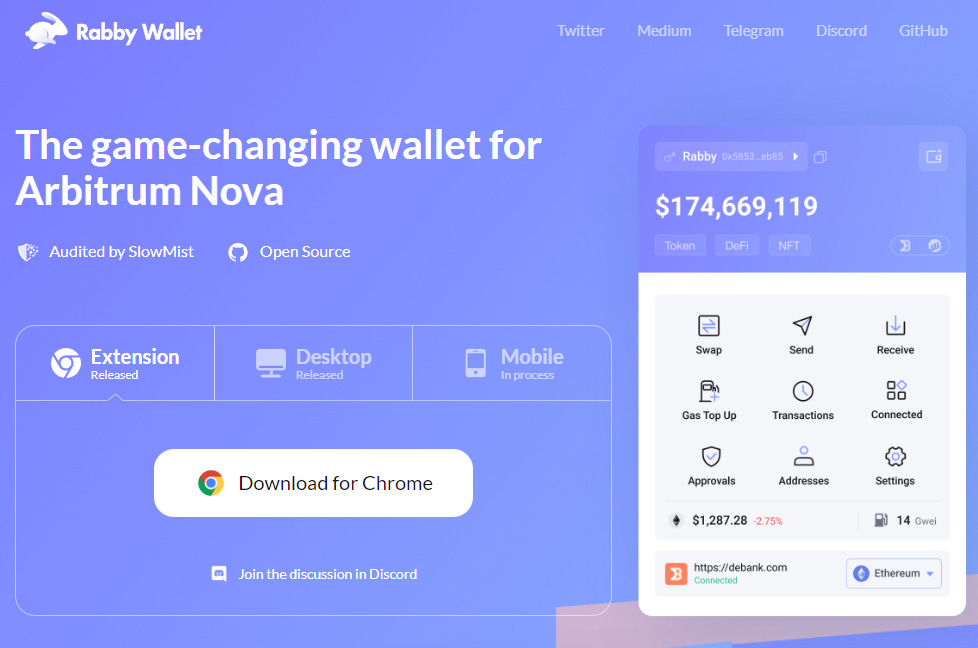
Some features look trivial on paper. But in practice they save you from doing dumb things—like approving unlimited token allowances or signing a transaction that sends funds to the wrong address. Seriously? Yes. Rabby centralizes commonly missed decisions so you don’t have to be an expert to be safe. For instance, it highlights allowance increases and shows the exact tokens affected. Short sentence: real helpful. Longer thought: when you can see what a site would be allowed to move, and you control that allowance from the same popup, you stop tricking yourself into risky approvals.
On one hand, design matters. On the other, under-the-hood decisions—how keys are managed, how transactions are simulated—matter too. Rabby compresses both concerns by making permission decisions explicit and by giving you quick access to transaction simulation info. Initially I thought simulation was overkill; though actually, seeing a simulation prior to signing prevents so many “oh no” moments that it becomes essential fast.
Here’s the thing. Many extensions make it easy to accept defaults. That’s human nature—we click through. Rabby nudges you to check important stuff. You still can breeze through when you know exactly what you’re doing. But when something smells off, the interface gives you a reason to pause. Hmm… that pause helps. And yes, it’s the pause that stops mistakes.
I use multiple accounts for different roles: trading, yield farming, small-value experiments. Managing them should be painless. Rabby handles multi-account workflows with fewer context switches. You can assign labels, choose which account interacts with a website, and switch in the popup rather than digging through a buried settings panel. Little wins add up. Try swapping accounts while keeping a dapp connected—it’s smoother than I expected and that makes interactions less error-prone.
Also, Tab performance matters. Some extensions slow down when many tabs or dapps are active. Rabby felt snappier during heavy use. My instinct here might be biased by familiarity, but the empirical result was clear: fewer freezes, faster popups. That translates to fewer accidental signings when you’re trying to be quick.
Okay, security theater is a thing—lots of flashy warnings and scary icons that don’t help. Rabby opts for practical controls: granular allowance management, simple connection controls, and clear transaction breakdowns. It doesn’t pretend to be an impenetrable vault (nothing is), but it reduces human error vectors substantially. Something about clear defaults and transparent prompts improves safety more than an intimidating splash screen ever could.
On the technical side, Rabby keeps private keys locally and asks permission for every critical action. It’s not a magic bullet. You still need to practice good operational security—hardware wallet integration, safe seed storage, and verifying addresses out-of-band when moving large sums. But the extension doesn’t fight you when you try to be safe, and that design choice matters.
(oh, and by the way…) if you like inspecting transactions before signing, Rabby surfaces decoded calldata in ways that surprised me. It’s not perfect—somethin’ is always a compromise—but it helps more than it hinders.
As someone who builds and tests dapps occasionally, I appreciate tools that play nice with standard developer flows. Rabby has some neat developer-oriented toggles and network management that make switching between testnets and private nodes less tortuous. It doesn’t get in the way when you want to sign a custom transaction or simulate contract behavior. That flexibility is useful whether you’re debugging or just trying to replicate a complex interaction from a tutorial.
On the other hand, there’s a tradeoff. Not every advanced tweak is exposed by default. That’s deliberate. They hide the scary stuff until you opt into it. It’s a balance—default safety vs. power—and Rabby leans toward not burning people by default. I’m not 100% sure every power user will love that, but for most DeFi users it’s the right call.
Last month I nearly approved an unlimited token allowance while swapping between two DEXs. My hands were moving fast. The UI showed a clear allowance increase warning and gave me a one-click option to set a safer cap. I hit the cap, completed the trade, and breathed a sigh of relief. Without that nudge I’d have left a wider attack surface. That little intervention saved me from an avoidable risk.
Life in crypto is less about perfect security and more about stacking sensible choices. A wallet that helps you stack well is more valuable than one that claims to be perfect. Rabby feels like a good stacking partner: it nudges, it explains, and it doesn’t shout.
If you want to try it, I picked up Rabby and set it up in under ten minutes. The defaults were reasonable, the labeling helped, and switching networks was straightforward. I’m not advertising—I’m recommending from use—but if you’re curious, here’s a place to start: rabby. Try small transactions first. Test allowances. See how it fits your workflow.
Yes. It supports connecting hardware devices for signing, which is a good best practice for larger balances. You’ll still manage accounts in the extension, but private keys remain on the device during signing.
Absolutely. It handles mainnet, testnets, and custom RPC endpoints. The UX for switching isn’t flashy, but it’s practical and reliable—enough for daily use and for debugging when needed.

সম্পাদক ও প্রকাশকঃ দিন মোঃ রাজিব | ভারপ্রাপ্ত সম্পাদকঃ রাজু আহমেদ | ৩৬৩/বি, উত্তর পীরের বাগ, মিরপুর, ঢাকা - ১২১৬| মোবাইলঃ ০১৭৫৭৬৭৭৯৮৮ | ইমেইল : dailyajkernews24@gmail.com
All rights reserved © 2021 - 2025 dailyajkernews.com