

সোমবার, ০২ মার্চ ২০২৬, ০৪:৪৬ অপরাহ্ন


Okay, so check this out—I’ve chased blockchain activity across a few explorers. Wow! At first it felt like reading logbooks from a spaceship, confusing and oddly thrilling. My instinct said: follow the addresses, track the money, watch patterns emerge. Initially I thought the only thing that mattered was raw transaction data, but then I realized context matters — token metadata, token holders, and program interactions tell the real story.
Really? Yep. Solana’s throughput makes things look noisy. But that noise contains signals if you know where to look. Sometimes I skim for the obvious: big SOL movements, minted NFTs, or suspicious repeated transfers. Other times I go deep — peeling through inner instructions and program logs to understand why a transaction happened, not just that it happened.
Whoa! Here’s the thing. Token trackers are the quick map. NFT trackers are the gallery labels. SOL transaction viewers are the time-stamped receipts. Together they give a layered view of on-chain behavior, and each tool shines at different tasks, though they overlap a lot. I’m biased, but for day-to-day sleuthing I keep one explorer pinned — less friction, faster follow-ups.
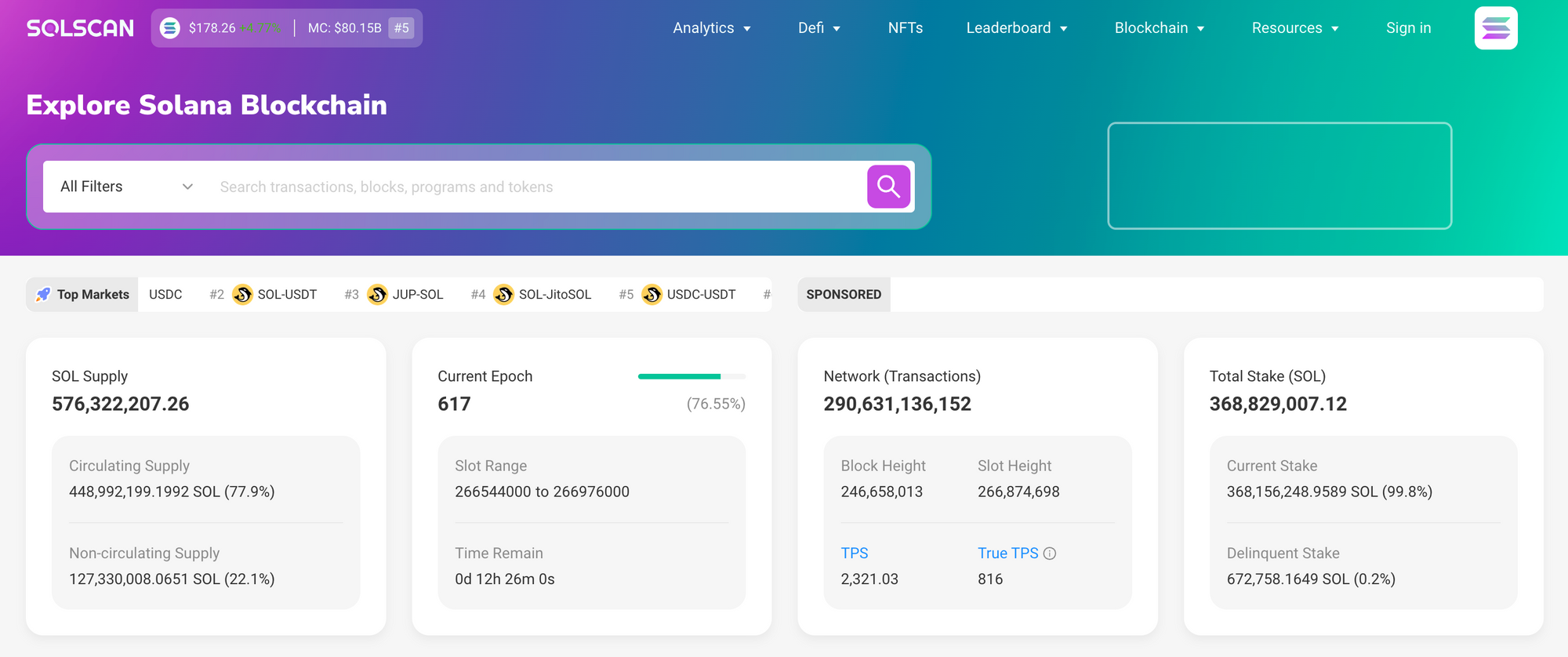
I like tools that don’t hide the messy parts. Hmm… solscan gives both the bird’s-eye and the forensic level. Seriously? Yes — you can see token supply changes, token holders, historical transfers, NFT metadata, and individual transaction inner instructions. On one hand you get neat balances and charts; on the other hand you can blow open a transaction and trace each instruction executed by a program, which is massive when you’re investigating exploits or tokenomics quirks. I’m not 100% sure that any one explorer is perfect, but solscan gets me 80% of the way there faster than most. Check it out here: solscan.
Something felt off about token tracking when I started — token mints were invisible or fragmented across indices. Then tools matured. At first glance token trackers simply list transfers. Actually, wait—let me rephrase that: the best token trackers index token program events, split out transfers, decimals, and burned quantities, and then surface holder distributions and change over time. On one hand you can watch whale accumulation. On the other hand you can spot dusting attacks or shard dispersals. For NFT collectors, that holder-history context is very useful when judging provenance.
Hmm… tangents happen. (oh, and by the way…) Not every transfer is meaningful. Sometimes wallets move tokens between personal accounts, or programs rebalance liquidity and it looks like chaos. My gut says: always check the source wallet’s prior behavior. If it’s a smart contract or an exchange deposit address, adjust your interpretation. The deeper you go, the more patterns you recognize — repeat senders, time-of-day clusters, program-invoked transfers, etc.
Wow! Token tracker basics are deceptively simple. At their core, a token tracker decodes SPL token program events and maps them to human-readable records. Medium-level view: it shows balances by wallet, token supply, and often a simple chart of transfers over time. Longer thought: when combined with holder concentration metrics (top-10 addresses and their percentages), you can infer the risk of rug pulls or sudden supply dumps, and that matters for both traders and devs preparing audits.
Start with a suspicion. Really. Maybe you saw an airdrop, or a rug rumor, or a sudden price spike. Short step: paste the token mint into a tracker and check total supply and recent mint events. Medium step: inspect top holders and recent large transfers. Long thought: if you see new tokens minted after the initial offering, or large transfers to cold wallets and then to exchanges, you need to map the timeline and correlate it with on-chain program calls — it reveals intent more clearly than price charts alone.
Whoa! When I hunt suspicious tokens I look for five red flags. First, centralized mint authority: can the mint authority mint more tokens at will? Second, token distribution: is the top 10 holding an outsized share? Third, sudden transfers to exchange deposit addresses. Fourth, frequent transfers between a handful of addresses (wash trading signals). Fifth, contract-level interactions that don’t match stated tokenomics. Each flag alone might be benign, but stacked together they escalate risk quickly.
Something felt off about a token last month — very very strange holder behavior. I first assumed it was market-making, then realized the same wallets kept rotating tokens among themselves in a narrow time window. On one hand that could be coordinated liquidity ops. Though actually, when I dug into memos and inner instructions, the transfers were triggered by a program that executed conditional payouts — weird but explainable. The key is not to jump to conclusions; verify program logs and look for external signals like social announcements or exchange listings.
Slow down. Watch the memos and inner instructions. Many transactions include instructions for program calls — staking, swapping, liquidity provision — and those are where the “why” lives. Medium-level: inner instructions may show a token swap inside a single transaction, with multiple instructions chained. Longer thought: unraveling that chain can explain anomalous balances, reveal arbitrage bots or sandwich attempts, and prove whether an on-chain event was malicious or simply algorithmic market behavior.
NFTs are messy. Wow! Metadata inconsistencies are common, especially with off-chain JSON-hosted data. Medium point: a good NFT tracker lists mint transactions, token creator, verified collections, and metadata URIs. Longer thought: cross-checking metadata hosted on IPFS or Arweave against what the explorer shows can save you from buying fakes or clones — sometimes the on-chain token points one way while the off-chain content is totally different.
Whoa! Provenance matters for collectors. Look at the initial minter and the block in which the mint occurred. If lots of tokens minted within seconds across a cluster of addresses, that might be a bot mint rather than a fair drop. On one hand rapid mints might indicate demand; on the other hand they could show preferential access. My instinct said: check for creator verification badges and collection-level royalty enforcement — those are practical trust signals.
Okay, so here’s a common scenario: you buy an NFT and later discover the creator changed metadata or redirected hosting. That bugs me. Medium solution: archive metadata and reference the on-chain authority record. Long thought: if creators can alter content post-mint without an immutable pointer, collectors should price in that risk; some projects avoid mutable URIs and that’s a deliberate design signal you should value.
Solana’s low fees make lots of tiny transfers possible. Really? Yes — micro-transfers are common for airdrops and program rent payments. Short observation: watch transfer sizes relative to rent exemptions and token decimals. Medium: check the transaction fee payer; sometimes the payer is a third-party relay or a program, which can mislead naive analyses. Long thought: when you see many small SOL transfers tied to a single transaction, trace the caller program — it often orchestrates complex flows like staking compounding or marketplace settlements.
Hmm… fee behavior tells stories. If fees spike for a cluster of transactions it might be congestion or a targeted exploit. On one hand higher fees erode small-arbitrage opportunities. Though actually, a sudden fee increase can signal coordinated bot activity — and that’s actionable intelligence for traders and forensic teams. My approach: build simple alerts for fee anomalies and unusual transaction density around specific addresses.
Something I do often is bookmark suspicious accounts. Wow! It helps when patterns reappear weeks later. Medium: catalog their common counterparties and flagged programs. Longer thought: over time these catalogs become a personal database of scam signatures, liquidity aggregators, and legitimate market makers, which speeds up future triage and reduces false alarms.
Check the mint authority on the token’s mint account. If a mint authority is present and controlled by a single key or a multi-sig you don’t trust, there is a risk of future minting; if the mint authority is set to null, the supply is fixed. Also scan for mint events in recent history — fresh minting is a strong signal.
Partially. Explorers show the on-chain metadata URI and sometimes a preview, but to fully verify content you should fetch the off-chain payload (IPFS/Arweave) and compare checksums. If the metadata points to mutable HTTP endpoints, assume changeability and higher risk.
Look for repeated transfers among a closed set of wallets, circular flows that return funds to origin addresses, and timing patterns where transactions occur in rapid succession. Pair this with tiny fee-paying wallets and consistent gas patterns to strengthen your suspicion.
I’ll be honest — using explorers well is a muscle. Wow! Over time, you learn which quirks are noise and which are signals. Medium wrap-up: use token and NFT trackers to establish context, then dive into transaction details and program logs for causality. Longer final thought: nothing replaces habit, curiosity, and a few bookmarked tools; blend automated alerts with manual audits, and you’ll spot real issues long before they hit headlines. Somethin’ to keep in your toolkit.

সম্পাদক ও প্রকাশকঃ দিন মোঃ রাজিব | ভারপ্রাপ্ত সম্পাদকঃ রাজু আহমেদ | ৩৬৩/বি, উত্তর পীরের বাগ, মিরপুর, ঢাকা - ১২১৬| মোবাইলঃ ০১৭৫৭৬৭৭৯৮৮ | ইমেইল : dailyajkernews24@gmail.com
All rights reserved © 2021 - 2025 dailyajkernews.com